Pharmaceutical chemist | EN<>ES

Gerardo LinRegulatory documentation for pharma and biotech, from the first Module 3 to the tenth variation.

I translate and write the CMC, labeling and lifecycle documentation that regulatory teams submit across Latin America and beyond. Having followed the same products through approvals, variations and renewals, I know these dossiers end to end, not page by page.
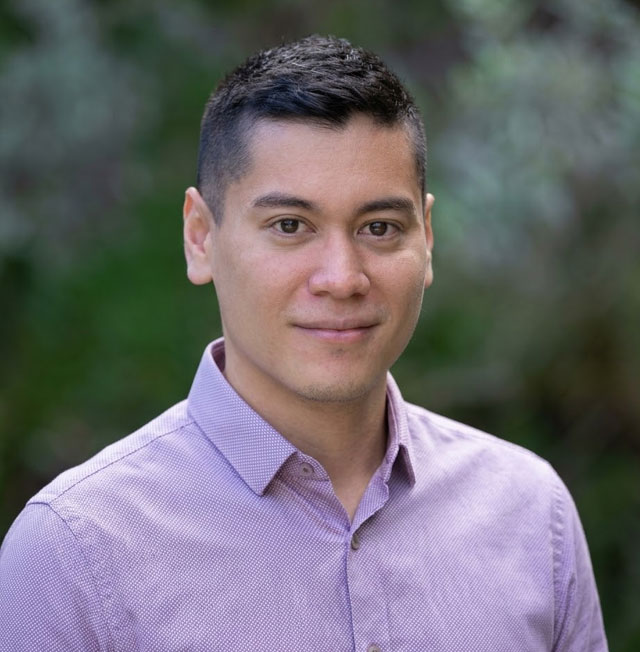
Portrait of Gerardo Lin
Based in Uruguay, working with teams in the Americas and Europe
Who I work with

Three kinds of teams, one standard

1

Multinational pharma and biotech

English to Spanish

Regulatory teams submitting in Latin America: Module 3, labeling, variations, renewals and responses to health authority queries, adapted from EMA, MHRA and global reference dossiers.

2

Latin American labs going abroad

Spanish to English

Manufacturers registering products in other markets: site master files, analytical and process validation, specifications and stability, in English that reads as if it had been written in English.

3

Biotech startups and CROs

Writing and terminology

Young companies that need technical and business proposals, website content and consistent scientific terminology, written from scratch in English or translated.

Services

What I work on

Translation, revision and original writing, always with a chemist's eye on the content. Quotes on request.

CMC / Quality (CTD Module 3 and 2.3)

  • Analytical procedures and validation, specifications and justifications
  • Batch analyses, stability programs and statistics
  • Process validation, aseptic filling and filter validation
  • Biologics characterization, reference standards, DMFs/ASMFs, CEPs

Labeling

  • Company Core Data Sheets (CCDS)
  • Prescribing Information, SmPC, package inserts
  • Instructions for use
  • Local labeling updates driven by safety or lifecycle changes

Lifecycle and regulatory procedures

  • Variation packages and renewals
  • Health authority deficiency letters and responses
  • Reliance procedures and supporting correspondence
  • Device documentation for combination products

Clinical, safety and scientific writing

  • Clinical overviews and Module 2.7 summaries
  • Risk management plans and PBRERs
  • Technical and business proposals, website content
  • Terminology standardization across a body of documents
Expertise at a glance

Where the work has been

3.5M+words of regulatory content since 2021
1.1Mwords of biologics CMC
7+Latin American health authorities
15+years in pharma regulatory documentation

By document type

CMC / Quality
52%
Labeling
17%
Clinical summaries
11%
Device technical files
9%
Safety / PV
8%
GMP, guidelines, other
3%

Share of words since 2021; labeling volume estimated.

By therapeutic area

Oncology
28%
Endocrinology and metabolism
23%
Reproductive health
19%
Drug delivery devices
9%
Neurology (MS)
7%
Cardiovascular and other
14%

Product experience includes

  • Monoclonal antibodies, recombinant gonadotropins, somatropin, interferons
  • Kinase, proteasome and aromatase inhibitors, alkylating agents
  • Hormonal contraceptives, HRT, thyroid hormones, peptides
  • Antidiabetics, cardiovascular drugs, antivirals, antibiotics
  • Autoinjectors, pen injectors, ELISA kits, VHH antibodies
  • among other product classes

Selected techniques

  • Peptide and glycan mapping, glycoform analysis
  • Charge variants (iCE, CZE), CE-SDS, SE-HPLC
  • Potency bioassays, viral clearance
  • Method validation, impurities, stability statistics
  • Aseptic filling and process validation
  • among others

Frameworks (selection)

  • COFEPRIS, INVIMA, DIGEMID, ARCSA, ANMAT, AGEMED, MSP and Central American authorities
  • ICH quality, safety and M4 guidelines
  • EU variations, GMP annexes, GVP, Ph. Eur.
  • Mexican NOMs, Colombian Decree 1782/2014, RTCA
  • EU MDR, ISO 13485, ISO 14971, IEC 62366
Why a chemist

I read a validation report the way a reviewer will

I'm a pharmaceutical chemist with an M.Sc. in Chemistry. My research was on the structural elucidation of glycans by NMR, MALDI-TOF and HPLC, so glycosylation profiles and comparability data are familiar ground.

I also spent four years as Technical Director at a chemical manufacturer: issuing manufacturing orders, running quality control, writing safety data sheets, designing a new QC laboratory and managing product registrations.

That background shapes how I work. When a source document contradicts itself, uses a term inconsistently or cites the wrong method, I notice, and I flag it rather than translate around it.

Years spent following the same products through initial applications, variations, renewals and health authority queries. The result is consistency across every version of a dossier.

Tools: memoQ, translation memory and terminology management, OCR and recovery of scanned or locked PDFs. Experience with SDL Trados Studio and Déjà Vu.

Education: M.Sc. in Chemistry and Pharmaceutical Chemist (Universidad de la República); Postgraduate Degree in Translation (Instituto Universitario Crandon).

How I work

Confidentiality comes first

  • I sign non-disclosure agreements on request.
  • I never name clients or products publicly. My portfolio describes work by product class only.
  • Translation memories and term bases are kept separately for each client.
  • Machine translation and AI tools are used only in line with each client's policy, agreed before the project starts.
  • Project files are kept as a local backup and deleted on request.
  • Replies within 24 hours on business days.
Research

Publications

  1. Del Puerto L, Rosetta R, Navatta M, Fontana C, Lin G, et al. Negligible elongation of mucin glycans with Gal beta 1-3 units distinguishes the laminated layer of Echinococcus multilocularis from that of E. granulosus. International Journal for Parasitology, 2016.
  2. Hsu TL, Lin G, Koizumi A, et al. The surface carbohydrates of the Echinococcus granulosus larva interact selectively with the rodent Kupffer cell receptor. Molecular and Biochemical Parasitology, 2013.
  3. Lin G, Todeschini AR, Koizumi A, et al. Further structural characterization of the Echinococcus granulosus laminated layer carbohydrates: the blood-antigen P1-motif gives rise to branches at different points of the O-glycan chains. Glycobiology, 2013.
  4. Díaz A, Casaravilla C, Irigoín F, Lin G, et al. Understanding the laminated layer of larval Echinococcus I: structure. Trends in Parasitology, 2011.
  5. Sellanes D, Campot F, Núñez I, Lin G, et al. Preparation and biological evaluation of key fragments and open analogues of scleritodermin A. Tetrahedron, 2010.
Contact

Tell me about your project

Send a short description: document type, volume, language direction and deadline. I'll reply within 24 hours on business days with questions or a quote.

Email Gerardo
Location
Uruguay, working remotely
Time zone
UTC-3: overlaps US working hours and European afternoons
Languages
Spanish (native), English (full professional)
LinkedIn
View profile
Portfolio
One-page PDF